
What adaptive difficulty can teach us about personalization, player behavior and UX in games.
 View full image
The idea behind dynamic difficulty
Sony’s patent describes systems that can adjust difficulty levels based on individual player performance. The idea is to keep players challenged without making the experience feel overwhelming or boring.
For UX designers, this is exciting because it points to a future where games can become more responsive to each player’s behavior.
A data-driven gaming experience
Dynamic difficulty relies on player performance data. Instead of treating difficulty as a static setting chosen once, the system can respond to how the player is actually performing.
This reflects a broader industry movement toward more adaptive and personalized experiences.
Predictive AI assistance
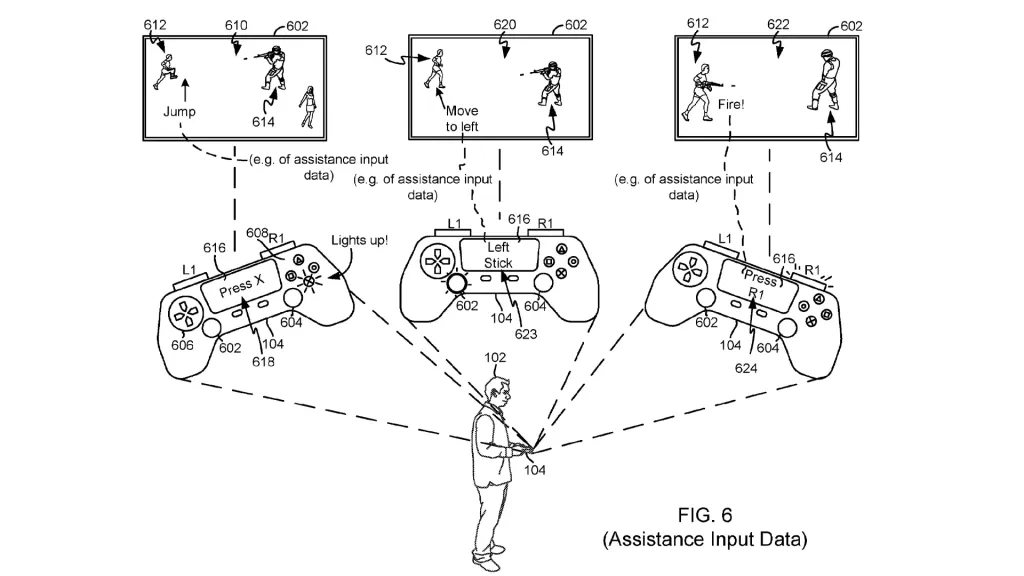
Sony also explored concepts related to predictive AI assistance in controllers. Imagine a controller that provides subtle cues, lighting or button guidance to help players in difficult moments.
This kind of assistance could make games more accessible and enjoyable for a wider audience.
The UX challenge
Adaptive difficulty must be handled carefully. If players feel that the game is secretly making things easier or harder without their awareness, it can affect trust and the sense of mastery.
The UX challenge is to support the player while preserving agency, fairness and emotional satisfaction.
Why designers matter
As games embrace these technologies, UX designers can help shape how adaptive systems are communicated, controlled and experienced.
The future of gaming will not only be about smarter systems. It will be about systems that feel understandable, fair and meaningful to players.
takeaway